
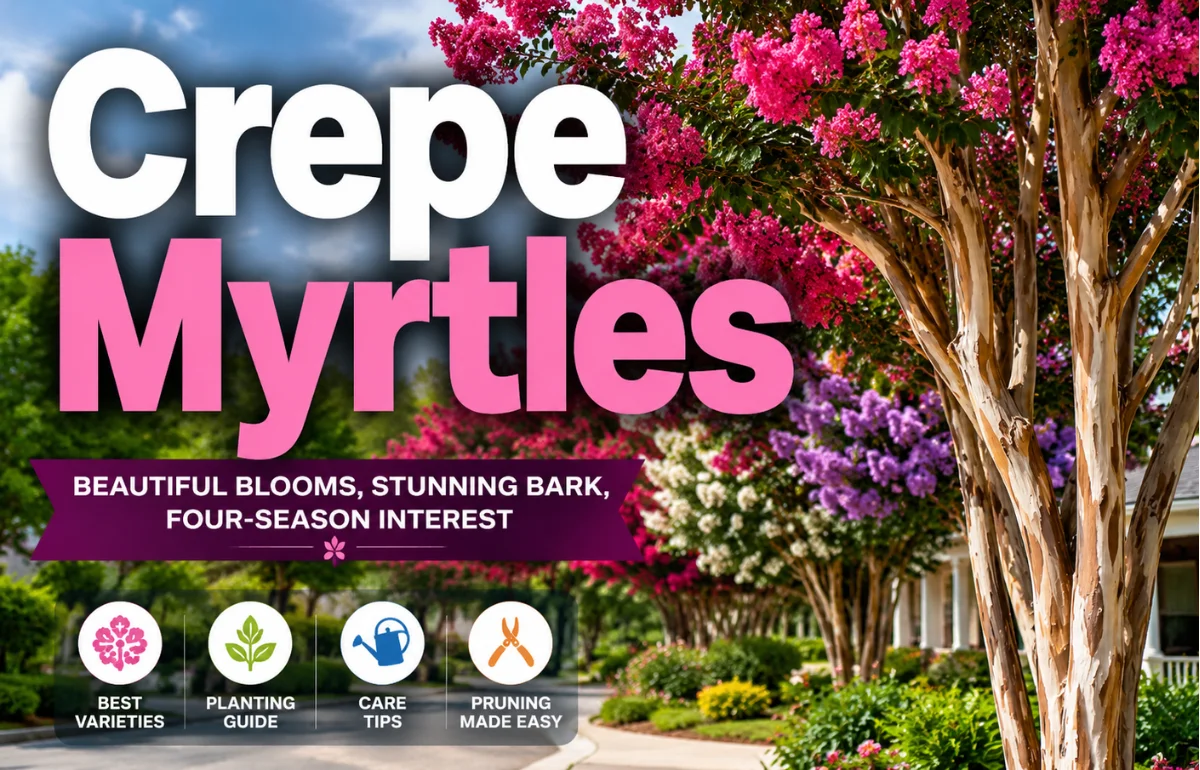
Crepe Myrtles (Lagerstroemia indica and related hybrids) are deciduous flowering trees and shrubs widely grown across Australia and around the world for their spectacular summer blooms, striking autumn foliage, and distinctive mottled bark. They belong to the Lythraceae family and are native to eastern Asia, though they have become a staple of Australian gardens in virtually every climate zone. Whether you’re looking for a small courtyard specimen or a grand avenue tree, crepe myrtles come in sizes and colours to suit nearly any situation — from compact dwarf forms under a metre tall to stately trees reaching eight metres or more.
I’ve planted several crepe myrtles over the years across different garden styles, and there’s a reason I keep coming back to them. They’re hard to kill once established, genuinely beautiful for most of the year, and give you more visual bang for your planting dollar than almost anything else in the garden.
Why Crepe Myrtles Deserve a Place in Your Garden
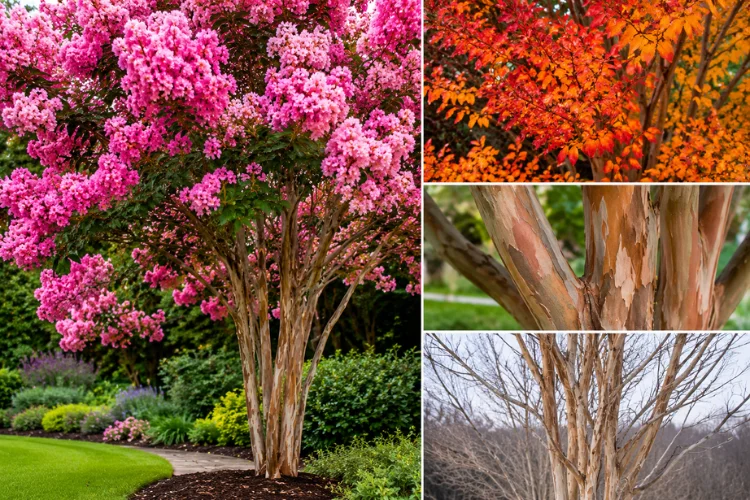
There are plenty of flowering trees you can choose from, but few tick as many practical boxes as crepe myrtles do. In the middle of summer — when most trees are just sitting there looking green — crepe myrtles burst into enormous clusters of ruffled flowers in shades of white, soft pink, hot pink, red, mauve, and deep purple. Those flower clusters can measure well over 30cm long in some modern varieties, and they last for weeks.
Beyond summer, the show doesn’t stop. Autumn brings some genuinely stunning leaf colour, with many varieties turning vivid shades of orange, red, and gold before dropping. Then in winter, the bare tree reveals what is honestly one of the most underrated features of any garden plant: the smooth, exfoliating bark. It peels away in patches to reveal layers of salmon-pink, silvery grey, and warm brown beneath — giving the tree real sculptural presence even without a single leaf on it.
For homeowners thinking about how their outdoor spaces look year-round, this kind of four-season interest is rare and worth planning around.
Varieties Worth Knowing
The crepe myrtle world has expanded enormously over the past two decades. The traditional Lagerstroemia indica varieties are still widely available, but they’ve largely been joined — and in many cases surpassed — by a generation of hybrids bred specifically for disease resistance, compact habits, and richer colour.
A few standout groups to know:
Indian Summer Series — One of the most widely planted groups in Australia. Hardy, mildew-resistant, and available in sizes from small to large. Varieties like ‘Natchez’ (white), ‘Tuscarora’ (dark coral pink), and ‘Sioux’ (fuchsia pink) have proven themselves in Australian conditions across a huge range of climates.
Diamonds in the Dark Series — A newer and genuinely exciting development. These varieties carry deep burgundy-black foliage through the growing season, which makes the flowers — white, red, pink, or purple — look even more vivid by contrast. They’re more compact than standard forms, typically reaching two to three metres, which makes them well-suited to smaller gardens and large containers.
Infinitini Series — Dwarf to medium-sized plants bred for prolific flowering and tight, manageable habits. Some varieties stay under a metre, which makes them workable even in pot plantings on a balcony or courtyard.
Enduring Summer Series — Built for Australia’s heat and humidity. Vigorous growers with good resistance to the stressors that often bother crepe myrtles in subtropical and coastal gardens.
One thing that doesn’t get discussed enough: foliage colour variety between different cultivars. Most people choose by flower colour, which is understandable, but the difference between a green-leafed and a dark burgundy-leafed crepe myrtle in the same garden can completely change the visual mood of a space. It’s worth considering both together.
Choosing the Right Size: A Quick Comparison
Size selection is where a lot of planting mistakes happen with crepe myrtles. People see a beautiful tree at the nursery and plant it without thinking about how large it will actually grow. Here’s a straightforward breakdown:
The key takeaway here: if you’re working with a compact garden or a courtyard, resist the urge to plant a full-sized specimen and prune it down each year. Instead, choose a dwarf or Diamonds in the Dark variety from the outset. The tree will be healthier, look better, and cause far less frustration in the long run.
If you’re redesigning your outdoor space more broadly, this kind of plant selection sits naturally within the same decision-making process as renovation planning support — getting the scale and placement right from the beginning saves a lot of remediation later.
How and Where to Plant Crepe Myrtles
Crepe myrtles are not fussy, but they do have a few non-negotiables.
Sunlight is the big one. These trees need full sun — ideally six or more hours of direct sunlight daily. In a shaded position, flowering is dramatically reduced and the plant becomes prone to powdery mildew. If you’re choosing between two planting spots, always go for the sunnier one.
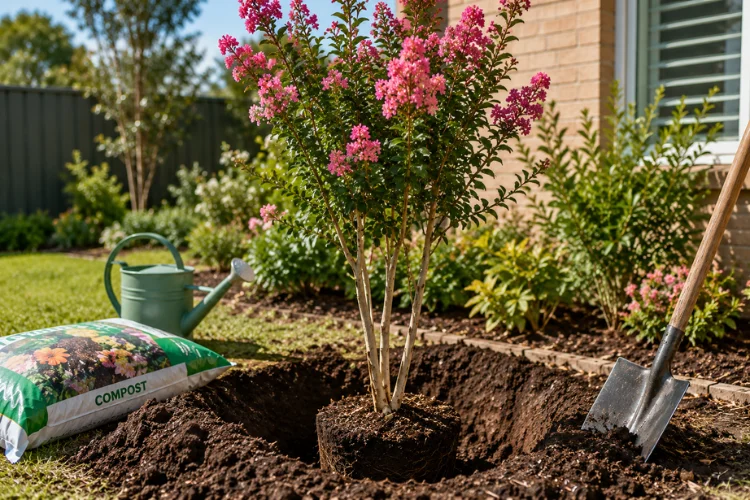
Soil is more flexible. Crepe myrtles tolerate a wide range of soils as long as drainage is reasonable. They won’t thank you for sitting in waterlogged ground, but they perform respectably in everything from sandy loam to heavier clay soils, provided water isn’t pooling around the root zone. Work in some compost at planting time to give the roots a good start.
Timing matters more than most people realise. The best planting window is late winter to early spring, once hard frosts have passed. This gives the plant a full warm season to establish its root system before it has to deal with summer heat. Container-grown plants can technically go in at any time of year, but planting in peak summer heat means significantly more irrigation work during establishment.
Wind protection is worth thinking about, particularly for larger-flowering varieties. The heavy flower clusters can be damaged or dropped prematurely in exposed positions. A sheltered spot — or a nearby fence or structure to the prevailing wind side — will extend your display noticeably.
Care Through the Seasons
Crepe myrtles are genuinely low-maintenance once established, but there are a few seasonal habits worth building in.
In spring, apply a slow-release fertiliser formulated for flowering trees and shrubs as new growth emerges. This is the single most important feeding of the year — it sets the tree up for the flowering season ahead. Avoid high-nitrogen fertilisers, which push lush leafy growth at the expense of flowers.
Through summer, newly planted trees need regular watering — at least weekly in dry conditions. Established trees are remarkably drought-tolerant but will reward occasional deep watering during extended dry spells with a heavier flowering display. Remove spent flower clusters as they fade to encourage a second or even third flush of blooms.
Autumn is mostly hands-off. Enjoy the foliage colour and let the tree wind down naturally. Stop fertilising by late summer.
In winter, the tree will drop its leaves entirely — this is normal, not a sign of disease or death. In cooler climates, a light mulch around the root zone helps protect young trees from hard frosts. This is also the right time for any pruning you want to do, while the framework is clearly visible.
The Pruning Question: What Most People Get Wrong
This is probably the most contentious topic in crepe myrtle care, and it’s worth being blunt about it. The practice often called “crepe murder” — cutting the tree back to thick stubs each winter — is extremely common and genuinely harmful. It creates a knobbled, disfigured framework, makes the plant susceptible to disease, and produces thinner, weaker flower stems over time.
Crepe myrtles do not need heavy pruning to flower well. They will produce abundant blooms on an unpruned tree every single year.
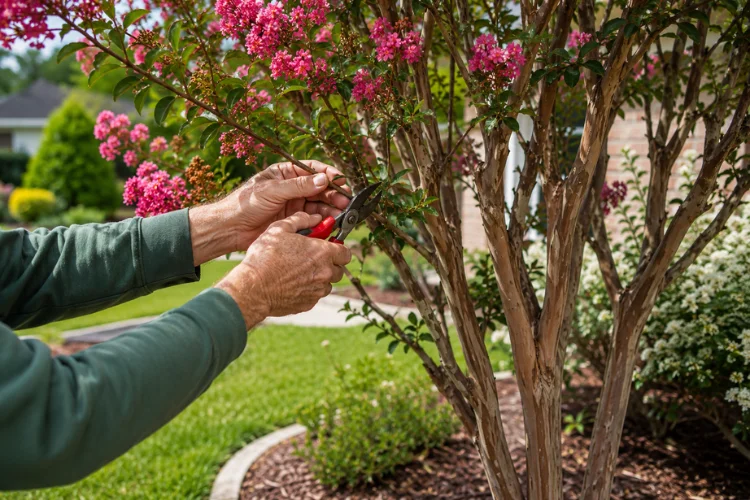
If you do want to prune, keep it light and purposeful. Remove any crossing or inward-growing branches, thin out congested growth from the interior of the tree, and clip off the previous season’s seedheads if you find them untidy. Do this in late winter, before new growth begins. The goal is a tree that retains its natural, vase-shaped elegance — not one that looks like it’s been attacked with a chainsaw.
If your main concern is size, the answer is choosing a smaller variety to begin with, not cutting a large one back annually.
Common Problems and How to Handle Them
Crepe myrtles are generally tough, but a few issues can arise:
Powdery mildew is the most common concern, particularly with older Lagerstroemia indica varieties. It shows as a white powdery coating on leaves and new shoots, usually in humid or poorly ventilated positions. Modern hybrids have been bred with strong mildew resistance, which is one more reason to choose a named variety from a reputable series rather than an unlabelled generic plant.
Aphids can cluster on new spring growth and attract sooty mould. A strong jet of water or an appropriate insecticidal spray will address them quickly.
Poor flowering is almost always caused by one of three things: insufficient sun, too much nitrogen fertiliser, or heavy pruning that removed the flowering wood. Diagnose which one applies and adjust accordingly.
FAQs
When do crepe myrtles flower in Australia?
Crepe myrtles typically flower from December through to March or April, with warmer climates like Queensland often seeing blooms start earlier and last longer.
How fast do crepe myrtles grow?
Most varieties add roughly 30–60 cm of growth per year under good conditions, reaching their mature height within 10–15 years depending on the variety.
Can crepe myrtles grow in pots?
Yes — dwarf varieties like those in the Infinitini and Diamonds in the Dark series perform well in containers at least 40–50 cm in diameter with good drainage and quality potting mix.
Are crepe myrtles drought-tolerant?
Once established after two to three years, crepe myrtles are highly drought-tolerant, though newly planted trees need regular watering through their first summer or two.
Do crepe myrtles have invasive roots?
No — crepe myrtles have a relatively non-invasive fibrous root system, making them safe to plant near paths, driveways, and buildings with adequate space for the canopy.
Wrapping Up
Crepe myrtles are one of the best-value ornamental trees available to Australian gardeners — genuinely beautiful across all four seasons, adaptable to a wide range of conditions, and far less demanding than their spectacular appearance might suggest. The main things to get right are sun position, variety selection for your space, and resisting the urge to over-prune.
If you’re in the process of rethinking your outdoor spaces more broadly, the plant choices you make now will shape how your garden looks and functions for years to come. Getting the planning right at the start — including things like scale, placement, and seasonal interest — is exactly the kind of detail that makes the difference between a good garden and a great one.
Other Resources

I’m Salman Khayam, the founder and editor of this blog, with 10 years of professional experience in Architecture, Interior Design, Home Improvement, and Real Estate. I provide expert advice and practical tips on a wide range of topics, including Solar Panel installation, Garage Solutions, Moving tips, as well as Cleaning and Pest Control, helping you create functional, stylish, and sustainable spaces that enhance your daily life.