

Weeping Lilly Pilly, botanically known as Waterhousea floribunda, is a fast-growing Australian native tree prized for its soft cascading foliage, pinkish-bronze new growth, and dense evergreen canopy. It’s most commonly used for privacy screening, informal hedging, and as a shade or feature tree, typically reaching 8 to 15 metres tall when left unpruned, or kept much lower with regular trimming. I’ve planted this tree in three different gardens over the years, and I can tell you firsthand why it’s become one of the most requested screening plants among my clients and readers alike.
If you’ve spent any time scrolling through nursery websites trying to find the right privacy plant, you’ve probably noticed the Weeping Lilly Pilly pop up again and again. There’s a reason for that. It grows fast, it looks elegant rather than blocky, and it does the one job most of us actually want from a screening tree: it disappears the neighbour’s window without turning your backyard into a fortress.
I want to walk you through what I’ve learned about planting and maintaining this tree, including a few things I had to figure out the hard way that most articles online don’t mention.
What Makes Weeping Lilly Pilly Different From Other Lilly Pillies
Here’s where a lot of people get tripped up. “Lilly Pilly” isn’t one plant — it’s a common name used for several genera in the Myrtaceae family, including Syzygium, Acmena, and Waterhousea. When someone says “Weeping Lilly Pilly,” they almost always mean Waterhousea floribunda, and it stands apart in one obvious way: the weeping habit.
Where a standard Syzygium hedge grows upright and dense with a fairly rigid silhouette, Waterhousea floribunda has a softer, drooping form. The branches arch outward and down, giving the tree movement in the wind that a clipped formal hedge simply doesn’t have. I planted a row of these along a back fence line in a client’s coastal property a few years back, and the way the foliage moved in the breeze became the single most commented-on feature of that garden.
The leaves themselves are glossy, narrow, and a rich green once mature, but the real show is the new growth. Fresh leaf flushes come through in shades ranging from soft pink to a deep wine-bronze colour, which gradually deepens to green as the leaf hardens off. In late spring through summer, the tree produces clusters of small, fluffy white flowers, which are mildly fragrant and draw in bees and native birds. These are followed by small, rounded fruit that birds particularly enjoy.
Quick Identification Snapshot
If you’re standing in front of a tree trying to confirm it’s a Weeping Lilly Pilly rather than another lilly pilly variety, look for these three things together: a noticeably drooping or cascading branch structure, new growth in pink-to-wine tones rather than bright red (which is more typical of Syzygium varieties), and slightly wavy leaf margins rather than perfectly flat ones.
How Tall Does Weeping Lilly Pilly Grow
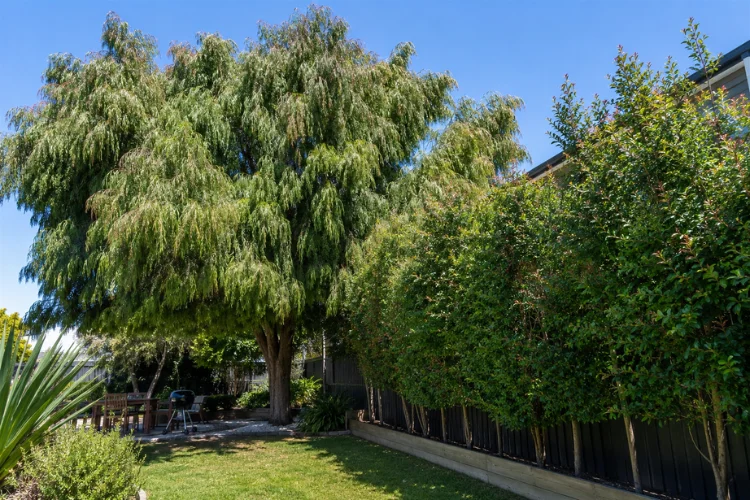
This is probably the question I get asked most often, and the honest answer depends entirely on whether you let it run free or keep it under control with pruning.
Left unpruned in good growing conditions, Waterhousea floribunda will reach 10 to 15 metres in height, with a canopy spread of up to 8 metres. I’ve seen mature specimens in older Sydney and Brisbane gardens that have been left alone for thirty-plus years, and they’re genuinely impressive shade trees at that point — broad, weeping canopies that you could host a barbecue under without a drop of direct sun touching the table.
For most suburban gardens, though, that kind of scale isn’t practical. The good news is this tree responds extremely well to clipping. Kept as a hedge or screen, it’s commonly maintained between 3 and 6 metres, and with consistent tip pruning from a young age, you can hold it even lower if you need something more modest for a smaller block.
Growth rate is fast by most standards. You’re typically looking at 60 to 90 centimetres of new growth per year once the tree is established, which is one of the main reasons landscapers and homeowners reach for it when they want privacy sooner rather than later. I planted a 45-litre specimen at the start of a growing season and had usable screening height within about eighteen months, which is quicker than most people expect from a tree this size.
Planting Weeping Lilly Pilly: What I Wish Someone Had Told Me
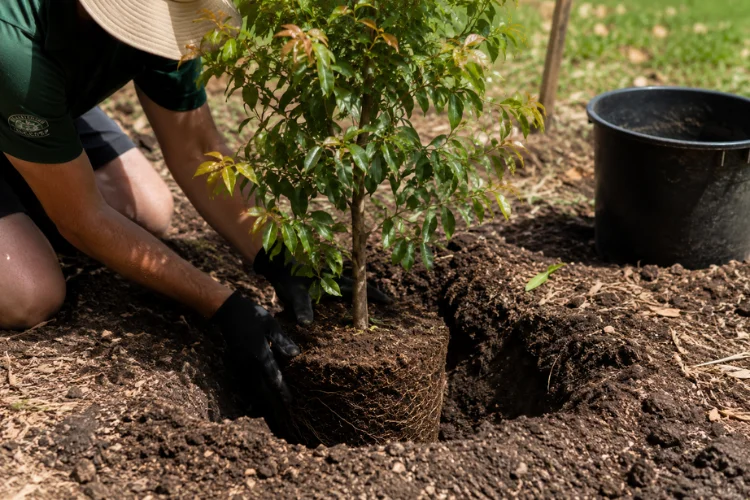
The planting advice you’ll find on most nursery websites is fairly generic — dig a hole twice the width of the pot, backfill, water well. All true, but there are a few specifics about this particular species that matter more than people realise.
Soil and Drainage
Waterhousea floribunda prefers well-drained loam or sandy loam with a slightly acidic to neutral pH. It will tolerate clay soils, but only if you improve drainage first. I learned this the hard way on a property with heavy clay subsoil — the first two trees I planted without amending the soil sat in waterlogged root zones after heavy rain and never thrived. The third one, planted in the same general area but with gypsum and composted organic matter worked through the hole and surrounding bed, took off within months. If you’re working with clay, don’t skip this step. It’s the single biggest factor separating a tree that struggles from one that flourishes.
Sun Requirements
This tree wants full sun to part shade. In deep shade, it will survive, but you’ll see leggy growth and a much sparser canopy, which defeats the purpose if you’re planting it for screening. If privacy is the goal, give it as much sun as your site allows.
Spacing for Screening and Hedging
Spacing depends entirely on how quickly you want a solid screen and how formal you want the final look.
For a dense, fast-forming privacy screen, plant at 1 to 1.5 metres apart. This is the spacing I generally recommend for boundary screening where privacy is the priority, and you don’t mind a more informal, naturalistic look as the canopies merge.
For a tighter, more formal hedge, you can go as close as 80 centimetres, though this requires more regular pruning to keep growth even across the row.
If you’re planting as a feature or specimen tree rather than a screen, give it 3 to 4 metres of breathing room so the natural weeping form can develop without competition.
Watering During Establishment
Newly planted trees need consistent moisture for the first 12 months. I water deeply twice a week during this establishment period, tapering to once weekly once the root system is developed. Mulching heavily — I use about 7 centimetres of organic mulch, kept clear of the trunk — makes an enormous difference to how much manual watering you’ll actually need to do, especially through a hot summer.
Weeping Lilly Pilly vs Other Popular Screening Trees
If you’re comparing your options before committing, it helps to see how Weeping Lilly Pilly stacks up against the other trees people typically shortlist for privacy screening in Australian gardens.
| Feature | Weeping Lilly Pilly | Syzygium (Straight Lilly Pilly) | Photinia | Murraya (Mock Orange) |
|---|---|---|---|---|
| Growth rate | Fast (60–90cm/year) | Fast (60–80cm/year) | Moderate-fast | Moderate |
| Mature height (unpruned) | 8–15m | 4–8m | 3–5m | 2–4m |
| Growth habit | Weeping, cascading | Upright, dense | Upright, rounded | Compact, bushy |
| Frost tolerance | Low–moderate | Moderate–high | High | Low |
| New growth colour | Pink to wine | Bright red | Bright red | Pale green |
| Best for | Tall informal screens, feature trees | Formal hedging | Colour contrast hedging | Fragrant low hedging |
| Flowering | White, summer | White, less prominent | White, spring | White, very fragrant |
What this table tells me, after working with all four of these in different gardens, is that the choice usually comes down to climate and the look you’re after. If you’re in a genuinely frost-prone area, Syzygium or Photinia will give you fewer headaches. If you want a tighter, more architectural hedge line, Murraya or a clipped Syzygium does that better. But if you’ve got the space and the climate, and you want something that looks less like a wall and more like a living, moving curtain of foliage, Weeping Lilly Pilly is hard to beat.
Pruning and Long-Term Maintenance
One of the more underrated qualities of this tree is how low-maintenance it actually is once established, despite how lush it looks.
I tip-prune mine in late winter, just before the spring growth flush, and again lightly in summer after the main flowering period. This keeps the canopy dense rather than leggy and encourages the kind of bushy, layered growth that makes for good screening. If you’re maintaining a formal hedge line rather than letting it weep naturally, you’ll want to shape it two to three times a year to keep the edges crisp, since the fast growth rate means it can get away from you quickly in warmer months.
Fertilising once in early spring and again in autumn with a slow-release native-friendly blend keeps growth steady without pushing overly soft, pest-prone foliage. I’d avoid high-phosphorus fertilisers as a general rule with most Australian natives, including this one.
Pest and disease pressure is generally low. The main thing to watch for is psyllid activity on new growth during humid weather, which can cause some leaf pitting but rarely threatens the health of an established tree. A reasonably regular inspection during the warmer months is normally all that’s needed to catch anything before it becomes a real problem.
Is Weeping Lilly Pilly Drought Tolerant?
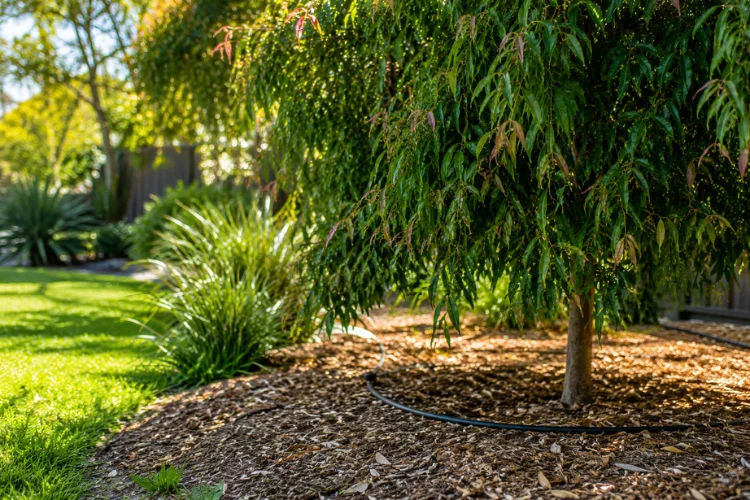
This one gets mixed answers across different nursery sources, and honestly, the truth sits somewhere in the middle. Young trees are not drought-tolerant and need regular watering through their first one to two years. Once well established with a deep root system, the tree develops a moderate tolerance to dry spells, particularly if it’s mulched well and planted in soil with reasonable water retention. I wouldn’t call it a true drought-tolerant species in the way you’d describe a grevillea or westringia, but a mature specimen will handle a dry summer with occasional deep watering far better than people assume.
Is It a True Australian Native?
Yes, and this is part of its appeal for anyone trying to build a garden with local ecological value. Waterhousea floribunda is native to eastern Australia, found naturally along rivers and in subtropical rainforest margins from around Cairns in Queensland down through northern New South Wales because it’s adapted to riparian, moisture-loving conditions in the wild, that gives you a clue as to why it appreciates consistent watering compared to some of the tougher, more drought-hardened native species you might be used to.
Its value to local wildlife is genuinely good. The flowers attract native bees and beneficial insects, the dense weeping canopy provides shelter and nesting opportunities for small birds, and the fruit that follows flowering draws in fruit-eating bird species through the cooler months. If attracting birdlife to your garden is part of your goal, this tree pulls its weight far more than most ornamental exotics would.
Where Weeping Lilly Pilly Works Best in a Garden
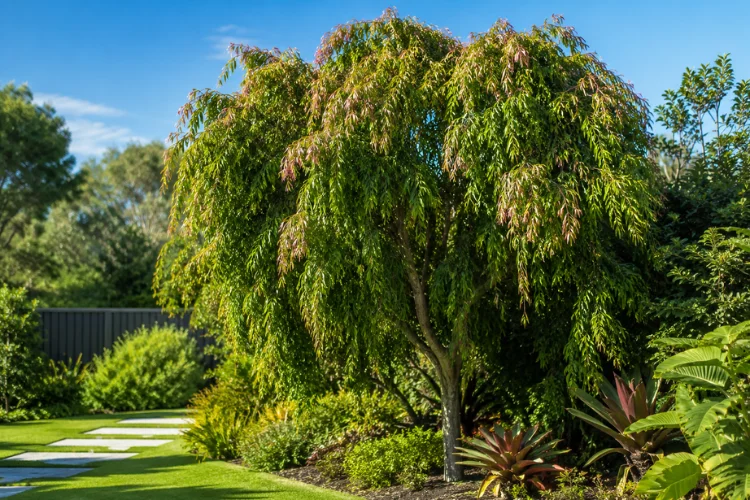
Beyond screening, this tree fits a surprising range of garden styles, which is part of why it shows up so consistently across different planting contexts.
In an Australian native garden, it sits naturally alongside other indigenous species and contributes to a layered, habitat-style planting scheme. In a more contemporary or formal garden, its weeping form actually reads as quite sculptural when given room to develop, especially as a single specimen tree rather than a row. It also does well in tropical-style gardens, where its glossy foliage and cascading habit complement broader-leafed companion planting.
I’ve also used it successfully as a street tree replacement and avenue planting where councils allow it, spaced around 3 metres apart for a soft, uniform canopy line along a driveway or boundary.
If you’re working through a broader landscaping project, it’s worth getting the fundamentals right before you start planting. I cover this kind of groundwork, from soil preparation through to long-term garden maintenance, in the home improvement courses I run through this site.
A Few Things Most Articles Don’t Tell You
After years of working with this tree across different soil types and climates, here are some details I rarely see covered elsewhere.
Root systems on Waterhousea floribunda are generally well-behaved compared to some fast-growing trees, but I’d still avoid planting closer than 3 to 4 metres from house foundations, pools, or underground pipework, particularly in clay soils where roots may seek out moisture more aggressively.
The colour intensity of the new growth flush is directly tied to sun exposure. Trees grown in fuller sun consistently produce more vivid pink and wine-toned new growth than those in part shade, where the flush tends to be a much paler, less dramatic colour. If the seasonal colour display matters to you, prioritise a sunnier position.
Wind exposure actually improves the weeping character of the tree rather than damaging it. Unlike more rigid hedging species that can get wind-burnt or misshapen in exposed coastal positions, this tree’s flexible branch structure tends to move and settle into an even more graceful form when it gets regular breeze, which makes it a genuinely good choice for coastal boundary planting, provided salt exposure isn’t too extreme.
Frequently Asked Questions
How fast does Weeping Lilly Pilly grow?
It typically grows 60 to 90 centimetres per year once established, making it one of the fastest-growing screening trees available for Australian gardens.
How far apart should I plant Weeping Lilly Pilly for a hedge?
Plant 1 to 1.5 metres apart for a dense informal screen, or as close as 80 centimetres for a tighter, more formal hedge line.
Does Weeping Lilly Pilly tolerate frost?
It has low to moderate frost tolerance and is best suited to temperate, coastal, and subtropical climates rather than regions with regular heavy frost.
Can Weeping Lilly Pilly be grown in pots?
Yes, in its early years, though its eventual size makes it better suited to in-ground planting long-term unless you’re prepared to root-prune and repot regularly.
Is Weeping Lilly Pilly the same as Syzygium Lilly Pilly?
No, they’re different genera. Weeping Lilly Pilly (Waterhousea floribunda) has a cascading habit and pink-wine new growth, while Syzygium varieties grow more upright with brighter red new growth.
Getting Started With Your Own Weeping Lilly Pilly
If you’ve made it this far, you’ve probably already decided this tree has a place in your garden, and honestly, I don’t think you’ll regret it. Get the soil preparation right from the start, give it consistent water through its first year, and choose a position with enough sun to bring out that pink-wine new growth, and you’ll have a screening tree that genuinely earns its keep within a couple of seasons.
If you’re planning a bigger garden overhaul and want to get the groundwork right before you commit to planting, take a look through our home improvement courses for practical guidance on everything from soil prep to long-term landscape planning.
More Resources

I’m Salman Khayam, the founder and editor of this blog, with 10 years of professional experience in Architecture, Interior Design, Home Improvement, and Real Estate. I provide expert advice and practical tips on a wide range of topics, including Solar Panel installation, Garage Solutions, Moving tips, as well as Cleaning and Pest Control, helping you create functional, stylish, and sustainable spaces that enhance your daily life.